
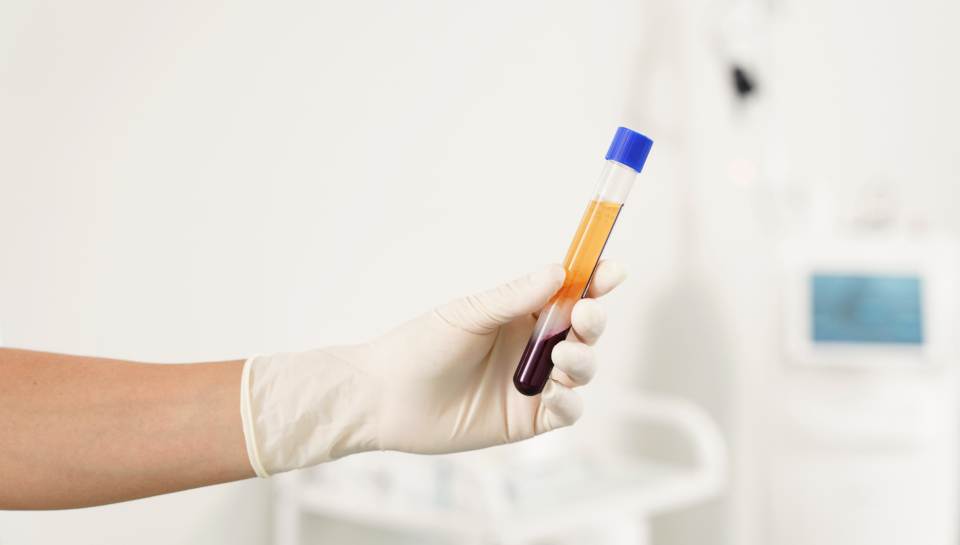
Platelet-rich plasma (PRP) therapy uses a patient’s own blood to deliver concentrated platelets and associated growth factors to a targeted area. It is being investigated as a minimally invasive treatment for certain musculoskeletal conditions.
What exactly is PRP?
Platelets are best known for helping blood clot; however, they also release chemical signals involved in the body’s response to injury.
To prepare PRP, a clinician draws blood and places it in a machine called a centrifuge, which spins the blood to separate its components. The portion containing a higher concentration of platelets is collected and prepared for injection.
The central idea is to deliver concentrated platelets and their growth factors to a targeted area.
The science behind PRP
Inside platelets are microscopic storage structures called alpha-granules. When platelets become activated, they release proteins known as growth factors, which send chemical signals that can influence the behaviour of nearby cells.
Two common examples discussed in PRP research are:
- Platelet-derived growth factor (PDGF): Involved in signalling processes that influence tissue growth, repair and blood vessel formation.
- Transforming growth factor-beta (TGF-β): Helps regulate inflammation and the production of the extracellular matrix (a network of substances surrounding cells, including collagen, that gives tissues such as tendons their structure and strength).
Potential biological effects of PRP
Research suggests that PRP may influence several biological processes involved in the body’s response to injury, including:
- Anti-Inflammatory Effects: PRP contains signalling molecules that may help regulate inflammatory responses in affected tissues.
- Tissue Repair Processes: Growth factors released by platelets may stimulate cellular activity and collagen production involved in tissue repair.
- Neurorepair Effects: Early research has explored whether PRP may support processes involved in nerve repair, although its clinical benefits for nerve-related pain remain uncertain.
Why might two PRP injections produce different results?
PRP preparations can differ considerably, even when used to treat the same condition.
Some preparations are leukocyte-rich (containing more white blood cells), while others are leukocyte-poor. Other factors, such as preparation methods, injection techniques and the nature of the injury being treated, may also contribute to differences in results.
What conditions has PRP been studied for?
PRP has been investigated as a potential treatment for chronic musculoskeletal conditions, particularly where conventional treatments have provided insufficient relief.
PRP may be a useful option for selected patients with certain conditions, although the strength of clinical evidence varies.
Conditions for which PRP has been studied include:
- Knee Osteoarthritis: One of the most studied applications of PRP. A 2025 meta-analysis found clinically meaningful improvements in knee pain compared with placebo at three and six months.
- Chronic Tendinopathies: Such as tennis elbow (lateral epicondylitis) and rotator cuff tendinopathy.
- Plantar Fasciitis: Chronic heel pain.
- Spine-Related Pain: Such as discogenic low back pain and sacroiliac (SI) joint pain.
- Frozen Shoulder: Also known as adhesive capsulitis.
Beyond chronic pain management, PRP has also been investigated as a supplementary treatment alongside rehabilitation for acute muscle and ligament injuries.
What happens during a PRP injection?
PRP injections are generally performed as outpatient procedures, although the duration varies. The process typically involves:
- Preparation and Blood Draw: The session begins with a simple blood draw, similar to a routine lab test. Approximately 15–60 mL of blood is taken from a vein in your arm.
- Centrifugation: The collected blood is placed in a sterile centrifuge. This machine spins the blood rapidly for 10–15 minutes to separate its components by density, isolating and concentrating the platelets. However, timing may differ depending on the protocol.
- Site Preparation: While the blood is being processed, the medical team cleans the target area. In some cases, a local anaesthetic (like lidocaine) may be used to numb the skin and soft tissue for comfort.
- Targeted Injection: The concentrated PRP is carefully extracted and injected into the injured tissue. Ultrasound guidance may be used to assist needle placement, depending on the procedure.
- Aftercare: A small bandage is applied. You may experience mild soreness or a “fullness” sensation at the injection site for 24–48 hours.

Why might you consider a PRP injection?
For selected patients, PRP may be considered as part of a broader treatment plan, particularly when conventional approaches have not provided sufficient relief. Potential reasons for considering PRP include:
- Potential Tissue-Repair Effects: Unlike corticosteroids, which primarily reduce inflammation, PRP is being investigated for its potential to support biological processes involved in tissue repair.
- Sustained Relief: Some studies suggest PRP may provide pain relief lasting several months for certain conditions, although the duration and effectiveness vary between patients.
Is PRP safe because it comes from your own blood?
Using your own blood to treat injuries may be reassuring, as foreign materials can sometimes cause unwanted reactions. However, this does not make the procedure risk-free.
Temporary pain, bruising, bleeding or swelling can occur around the injection site. Furthermore, as with most injections, infection is uncommon but possible. Increasing redness, fever or worsening pain after an injection should be assessed promptly. Certain medical conditions or medications may also affect a person’s suitability for the procedure.
How would you know if a PRP injection is working?
Improvements are generally measured through the outcomes that matter to the patient. Depending on the condition, this may mean less pain, better mobility, improved strength, greater ease with daily activities or a return to ‘normal’ function.
PRP remains an area of interest in musculoskeletal medicine, with research suggesting potential benefits for certain conditions. However, its effectiveness depends on the diagnosis, treatment approach and individual circumstances.
Understanding both the science behind PRP and the clinical evidence can help patients make more informed decisions about whether it is an appropriate option for their pain.
About Dr Hope Ang
Dr Hope Ang is a Consultant Anaesthesiologist with extensive expertise in acute and chronic pain management, dedicated to helping patients regain function, reduce suffering, and improve quality of life through evidence-based, personalised care.
——————————–
This article is for general education and does not replace an individual medical consultation. If you have persistent joint, tendon or muscle pain, a qualified healthcare professional can assess your condition and explain appropriate treatment options, including their potential benefits, limitations and risks. This platform allows doctors and healthcare professionals to share their views and insights. Opinions are those of the individual authors and do not represent an endorsement by this platform.