

For someone who experiences recurring migraines, pain relief can sometimes feel like a temporary victory. The medication works, the symptoms settle, and life returns to normal… until the next attack.
But managing migraines over the long-term means looking beyond individual attacks. It means understanding what contributes to them, what can reduce their frequency, and how to tell whether a treatment is actually working.
How is managing migraines different from treating them?
Far from being a simple headache, migraine is a neurological disorder and remains a leading cause of disability.
Treating a migraine attack focuses on relieving immediate symptoms, such as pain, nausea and sensitivity to light or sound. While medication may successfully relieve an individual attack, it does not necessarily prevent another from occurring.
Long-term migraine management takes a broader approach. Rather than focusing solely on individual attacks, it aims to reduce their frequency, severity and impact on everyday life through ongoing monitoring, lifestyle adjustments, preventive medication and, where appropriate, specialist procedures.
Acute treatment remains an important part of migraine management, but understanding how to prevent future attacks requires looking at why migraines occur in the first place.
At what point should someone consider a long-term preventive treatment plan?
Diagnostically, if you experience more than 15 headaches in a month, with at least 8 of them having similar symptoms to a migraine for more than three months, you can be considered to have chronic migraines.
However, even if you don’t fit into this criterion, headache attacks that are painful or debilitating enough by your own standards should make you consider preventive treatment.
What options exist for longer-term migraine control?
Longer-term migraine management generally involves two approaches: preventive medication and interventional procedures. Both aim to reduce the frequency, severity or impact of migraine attacks, rather than simply relieving pain when an attack occurs.
Preventive Medication
Preventive medications work by targeting biological processes involved in migraine attacks. These include:
- •
CGRP Monoclonal Antibodies: Targeted monthly injections—such as Erenumab (Aimovig), Galcanezumab (Emgality), and Fremanezumab (Ajovy) target CGRP signalling to reduce migraine frequency. - •
Oral Preventives: Medications like topiramate or beta-blockers remain common options to work through different mechanisms to help reduce migraine frequency.
Interventional Procedures
For patients whose migraines remain difficult to manage, specialist-delivered procedures may form part of their treatment plan. Some may also be considered when conventional preventive medications are unsuitable or poorly tolerated.
- •
Nerve Blocks: A minimally invasive procedure where local anaesthetic is injected around the Occipital Nerves or the Sphenopalatine Ganglion (SPG) to temporarily interrupt pain signalling. - •
Botulinum Toxin Type A (Botox): For chronic migraines, Botox involves small, precise injections across 31 sites in the head and neck to inhibit pain chemical release. - •
Trigger Point Injections: Addressing musculoskeletal tension in the neck and upper back that acts as a physical trigger.
The choice of treatment depends on how frequently migraines occur, their impact on daily life, previous treatment responses and individual medical considerations. Preventive medication and interventional procedures are not necessarily mutually exclusive, and treatment plans may be adjusted over time.
Complementary and Behavioral Strategies
Beyond medication and interventional procedures, certain non-drug approaches may also help patients manage migraines over the long term. These can be used alongside conventional treatments, although their effectiveness varies between individuals.
- •
Neuromodulation: Devices like Nerivio (wearable armband) or Cefaly use electrical stimulation to desensitise pain pathways. - •
Nutraceuticals: Evidence supports Magnesium glycinate, Riboflavin (B2), and CoQ10 may help improve brain stability. - •
Physiotherapy: Addressing neck stiffness and posture may reduce the overall “headache burden”, i.e. relieve associated neck pain and muscle tension that may cause headaches.
Lifestyle habits, including consistent sleep schedules, regular meals and stress management, may also form part of a broader migraine management plan.
How will you know whether your treatment is working?
A tool that may be useful for people experiencing recurring migraines is a headache diary. This evidence-based tool is used in a multidisciplinary approach to identify triggers and measure treatment efficacy.
Below is a standardised example of how to track your symptoms:
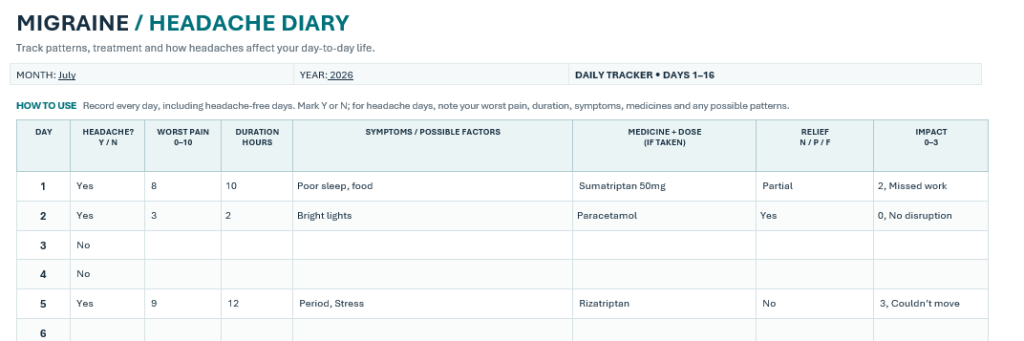
Our free Migraine & Headache Diary helps you record your symptoms, medication use and how your migraines affect your daily activities. Bring your completed diary to your next appointment to help your doctor better understand your headache patterns and assess your treatment plan.
Managing migraines over the long term rarely comes down to finding a single treatment that works forever. What helps one person may not help another, and a treatment that once worked may need to be reassessed as symptoms change.
The aim isn’t necessarily to eliminate every migraine attack. It’s to reduce their impact, understand what works, and make informed adjustments to treatment over time.
About Dr Hope Ang
Dr Hope Ang is a Consultant Anaesthesiologist with extensive expertise in acute and chronic pain management, dedicated to helping patients regain function, reduce suffering, and improve quality of life through evidence-based, personalised care.
——————————–
This article is for general education and does not replace a proper medical consultation. If you experience recurring migraines or have concerns about your headaches, an assessment with a qualified healthcare professional can help you better understand your condition and the available treatment and management options. This platform allows doctors and healthcare professionals to share their views and insights. Opinions are those of the individual authors and do not represent an endorsement by this platform.