
Pickleball Wrist Pain at a Glance
Pickleball is easy to pick up, but your wrist works hard in almost every shot. This article explains the common causes of pickleball wrist pain, from overuse conditions like De Quervain’s tenosynovitis to TFCC tears and fractures after a fall, the signs that tell you it’s time to see a hand specialist, and how non-surgical and surgical treatments differ.
Is Pickleball Hurting Your Wrist?
It rarely starts with anything dramatic. A dull ache on the thumb side of your wrist after an evening of doubles, a twinge when you twist open a jar the next morning or a fall while stretching back for a lob that you shake off as “just a sprain”. For many players, this is how pickleball wrist pain begins.
With new courts opening constantly around the island and tournaments getting more frequent, it seems that these days everyone and their cousin is starting to pick up pickleball. What often goes unrecognised by beginners is that pickleball involves your wrist doing plenty of quiet, repetitive work. Recognising the early signs of a pickleball wrist injury, and knowing when to get them checked, is key to enjoying the game for years to come.
Why Does Pickleball Cause Wrist Pain?
At first glance, pickleball can look gentle next to tennis or badminton, but pickleball actually involves the wrist in almost every shot. Soft dinks at the net rely on fine wrist control while drives and volleys send the impact of a hard ball through the paddle, reverberating up the hand and wrist.
Pickleball wrist injuries usually stem from two main causes. The first of these is repetition, as hundreds of repeated grips and flicks add up to wear and tear and potential injury over weeks of multiple sessions. The second is the danger of falls, which stems from quick footwork and sudden changes of direction which can result in players throwing out their hands to break a fall and subsequent arm and wrist injuries.
Research from the United States, where the sport gained popularity earlier, reflects how common both of these injury patterns are. In a 2026 national survey of adult players, about four in ten reported an arm, wrist or hand complaint over the past year. Emergency department data from 2015 to 2024 found that wrist injuries accounted for nearly half of pickleball-related arm and hand injuries.
What Are the Common Wrist Injuries in Pickleball?
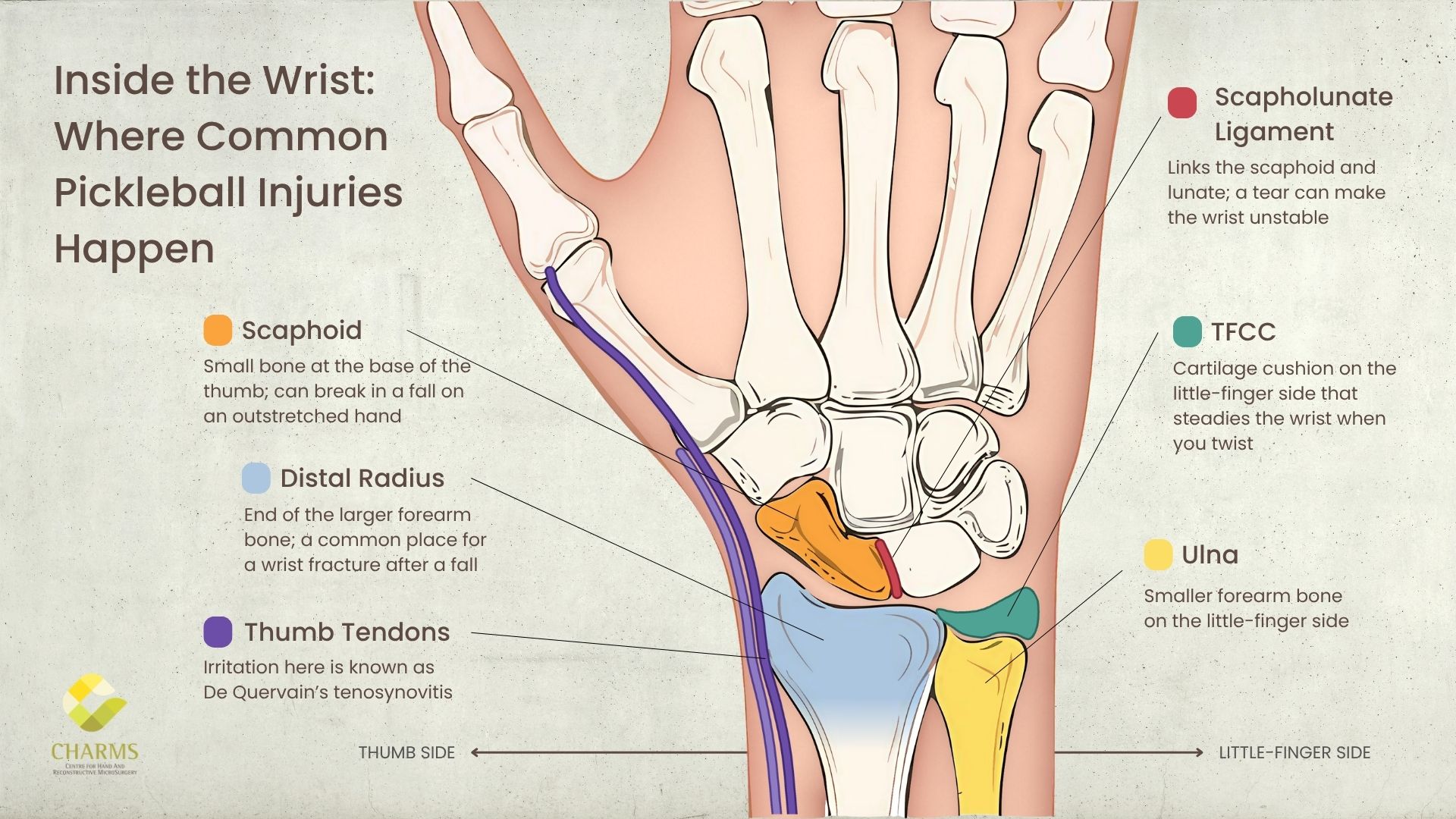
Where it hurts and how the pain started give useful clues about what’s behind your pickleball wrist pain. These are some of the conditions hand specialists commonly see in players of paddle and racquet sports.
De Quervain’s Tenosynovitis: Thumb-Side Wrist Pain
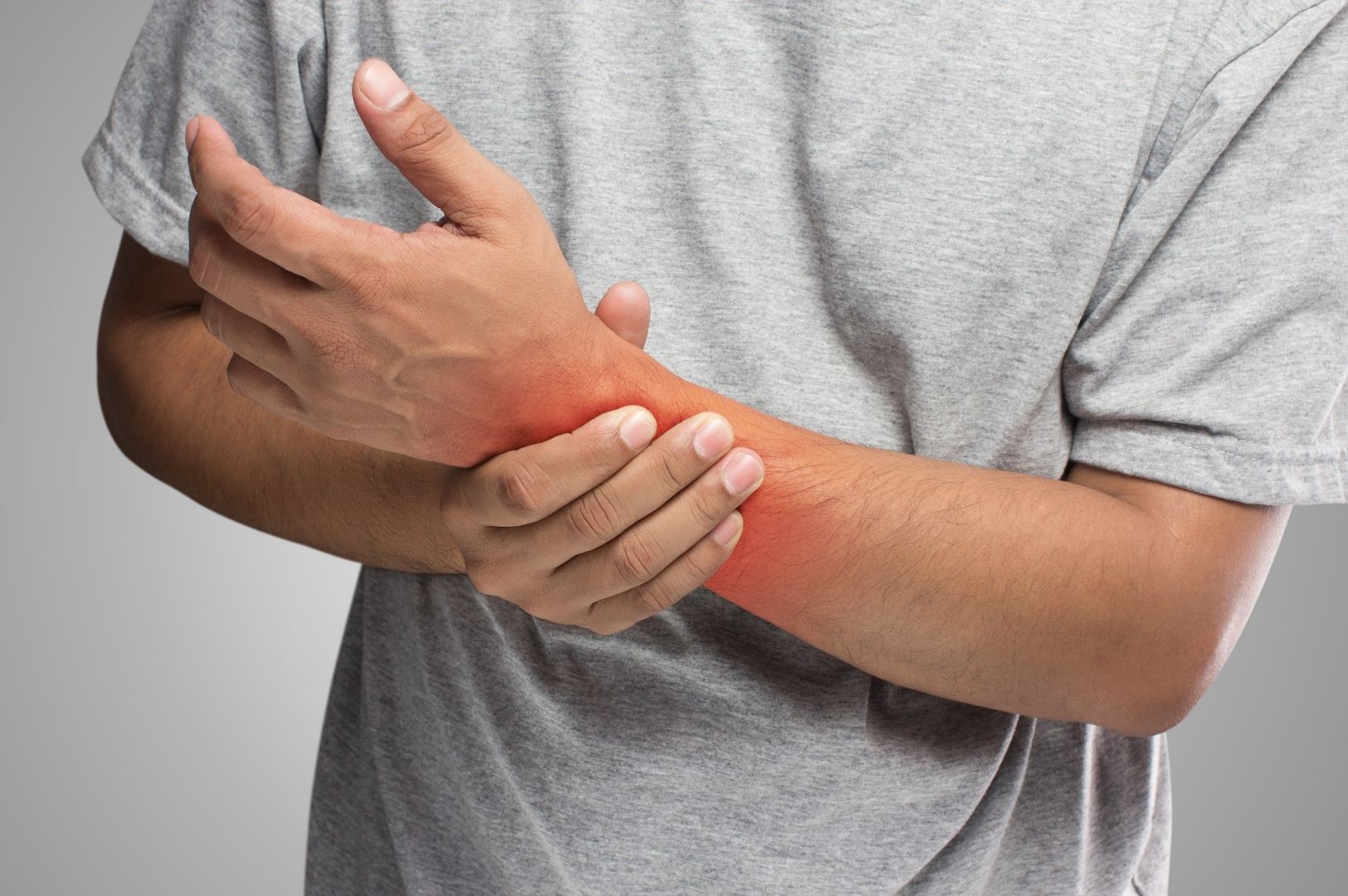
De Quervain’s tenosynovitis causes pain and swelling on the thumb side of the wrist that builds over time, often worse when gripping a paddle, pinching or twisting a jar lid. It happens when the tendons that move the thumb become irritated inside their tunnel, and the repeated gripping and flicking of pickleball can aggravate it.
TFCC Tear: Pain on the Little-Finger Side of the Wrist
The triangular fibrocartilage complex (TFCC) is a small cushion of cartilage and ligaments that steadies the wrist when you twist it. A TFCC tear may cause ulnar-sided wrist pain, clicking, and weakness when turning the wrist or pushing up from a chair, often after a twisting shot or a fall.
Wrist Sprain and Scapholunate Ligament Injury
A twist or awkward impact can stretch or tear the ligaments holding the wrist bones together, causing pain, swelling and stiffness. Most wrist sprains are mild, but an injury to the scapholunate ligament, which links two of the small wrist bones, can leave the wrist unstable if it isn’t recognised.
Scaphoid Fracture: The Break That Feels Like a Sprain
The scaphoid is a small bone at the base of the thumb that can break when you land on an outstretched hand. The main sign is pain in the small hollow at the base of the thumb. It can feel like an ordinary sprain and may not show on an early X-ray.
Distal Radius Fracture: A Broken Wrist After a Fall
The radius is the larger of the two forearm bones, and the end near the wrist is a common place to break after a fall on court, known as a distal radius fracture. Signs include sudden pain, swelling, bruising and sometimes a visible change in the wrist’s shape.
Wrist Tendinitis: Overuse Pain After Long Sessions
An ache across the back or front of the wrist after long or frequent sessions often comes from irritated tendons. It’s usually linked to repetition rather than a single injury, and is common when players increase how often they play.
Some players also notice pain on the outside of the elbow, known as tennis elbow, which can develop alongside wrist strain from the same repeated gripping.
None of these patterns on its own confirms a diagnosis, and more than one problem can be present at the same time.
Did you know? A broken wrist doesn’t always mean you can’t move it. A scaphoid fracture can feel like an ordinary sprain, and it may not show up on an X-ray taken soon after the fall.
When Should You See a Hand Specialist for Pickleball Wrist Pain?
It’s worth having your wrist assessed if you notice any of the following symptoms:
- Pain that hasn’t eased a day or two after a fall, especially pain involving the base of the thumb.
- Swelling or bruising that isn’t settling after 48 hours.
- Difficulty or discomfort when gripping a paddle, carrying a bag or pushing up from a chair.
- Clicking when moving the wrist or a sense of the wrist “giving way”.
- Numbness or tingling in your fingers.
- Overuse pain that keeps coming back, or lasts more than two weeks despite rest.
If your wrist looks misshapen, is very swollen, or your fingers turn pale or numb after a fall, go to the nearest emergency department.
At the appointment, a hand specialist will usually ask how the pain started and examine exactly where it hurts. Observing difficulties with everyday movements, such as pushing up from the armrests of a chair, can help pinpoint the exact problem. Specialists may also order imaging if necessary. Scaphoid fractures, for example, may require special X-ray views, and some injuries need an MRI or CT scan to be seen clearly.
Do Pickleball Wrist Injuries Need Surgery?
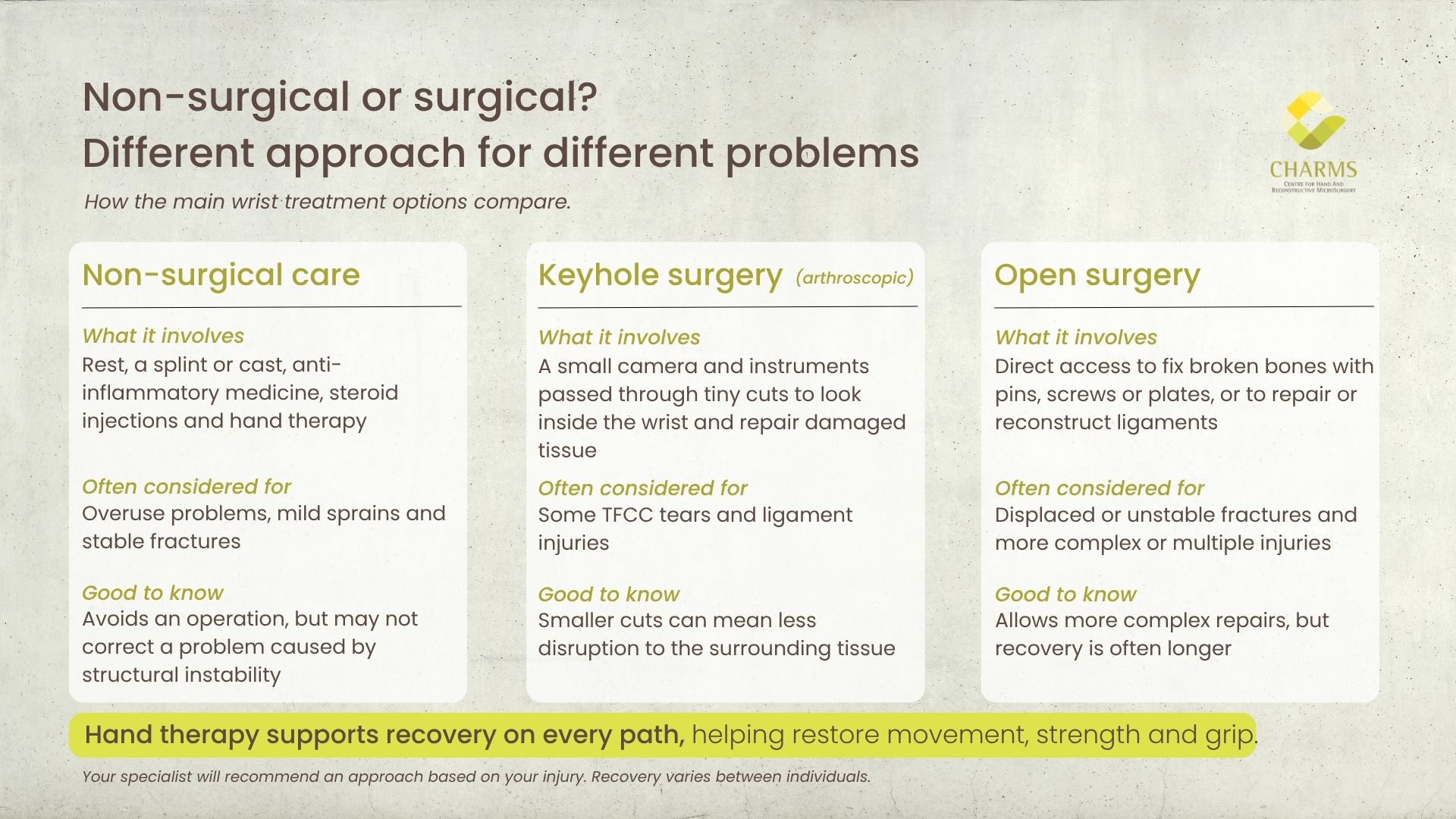
Many wrist problems can potentially be initially managed without surgery if a proper diagnosis is reached in a timely manner. The aim is to calm inflammation and give injured tissue the right conditions to heal. Surgery is usually considered when a fracture is out of position or unstable, when a ligament or cartilage injury leaves the wrist unstable, or when symptoms persist despite a reasonable period of non-surgical treatment.
Neither route is “better” in itself. They’re different approaches for different problems, and the key is finding the right one for the injury at hand.
How Do Doctors Decide on the Right Treatment for a Wrist Injury?
The difference in treatment comes down to what each approach involves and how the path to recovery looks based on each individual injury. Splinting and injections avoid an operation, but they may not correct a problem that is caused by structural instability. Keyhole (arthroscopic) wrist surgery uses smaller cuts than open surgery, which can mean less disruption to surrounding tissue. Open surgery allows the surgeon to deal with more complex or multiple injuries, but recovery is often longer.
Several factors guide which option your specialist suggests:
- The type and severity of the injury
- How long symptoms have been present
- Your work, hobbies and which hand you rely on
- How soon, and at what level, you hope to return to playing
Your specialist will explain the benefits, risks and likely recovery period of each option for your wrist.
Can Your Wrist Be Broken If You Can Still Move It?
It’s a common myth that a broken wrist automatically means an immobile wrist, but not necessarily. A scaphoid fracture can feel like an ordinary sprain with moderate pain at the base of the thumb, mild swelling, and a wrist that still works. It also doesn’t always show up on an X-ray taken soon after the injury. Wrist pain which hasn’t gone away within 24 hours of an injury occurring may be a sign of a fracture, and doctors may splint the wrist and repeat the X-ray later, or arrange an MRI, when a fracture is suspected.
Because the scaphoid has a limited blood supply, a fracture that goes unnoticed can be slow to heal. That’s not a reason to worry after every tumble, but it is a good reason not to try to play through thumb-side pain after a fall and get the injury thoroughly checked before returning to the court.
The Key Takeaways
Pickleball wrist pain is common, and much of it settles with rest, but it helps to know which signs deserve a closer look: pain that lingers after a fall, swelling that doesn’t settle, weakness or clicking when you twist, and overuse pain that keeps coming back.
Treatment ranges from a splint and some patience to keyhole or open surgery, and no one option is right for everyone. Recovery varies between individuals, and no one should promise a particular result. What matters is an accurate diagnosis, and a plan that fits your wrist, your daily life and the game you want to get back to.
About CHARMS
CHARMS (Centre for Hand and Reconstructive Microsurgery) cares for hand, wrist and upper limb conditions at clinics in Paragon Medical Suites and Mount Elizabeth Medical Centre.
Established in 2004, its team of hand surgeons, in-house hand therapists and nurses manages issues ranging from overuse problems and sports injuries to fractures and complex reconstructive surgery. Patients are guided every step of the way, from assessment to a clear explanation of surgical and non-surgical options to hand rehabilitation, all under one roof. This holistic approach means the care team works together on each patient’s recovery. CHARMS is part of the Alfa Medicus Group, a healthcare network across Singapore and Malaysia that has been established since 2008.
*This article is for general education and does not replace a proper consultation. If your wrist pain isn’t settling, or you’ve had a fall onto your hand, an assessment with a hand specialist is a sensible next step to understand your options.
CHARMS | Specialist care for hand and upper limb conditions
Paragon #09-08 | Mount Elizabeth #06-05 | Tel: +65 6733 9093 | www.charmssingapore.com