
Insights from Dr Ng Wei Yan, Senior Consultant Ophthalmologist and Medical Director, Aurora Eye Centre
Cataract technology has made it possible to see at more distances without glasses, so why would anyone choose simpler lenses?
The first signs of cataracts are different for everyone, it can manifest in more frequent glasses prescription changes, duller colours or the glare of headlights getting too strong on the nightly drive home.
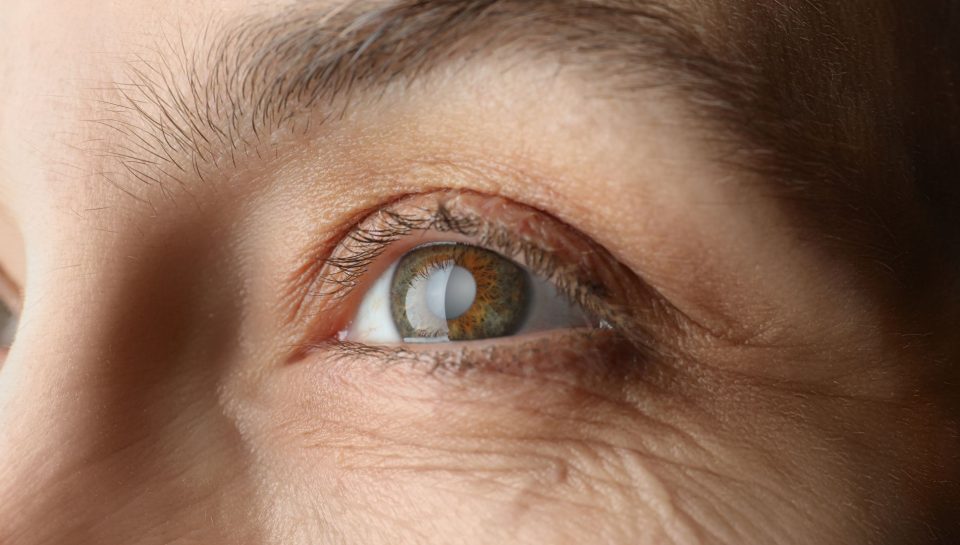
Cataracts form when the eye’s natural lens becomes cloudy over time, scattering light instead of focusing it clearly onto the retina. Stereotypically reserved for older people, cataracts, however, can result from trauma, certain eye diseases or develop in childhood.
Cataract surgery involves removing the cloudy natural lens and replacing it with an artificial intraocular lens (IOL). A similar procedure, known as refractive lens exchange (RLE), replaces the natural lens before a visually significant cataract has developed, primarily to correct vision and reduce dependence on glasses.
Although the reasons for undergoing these procedures differ, both involve choosing a replacement lens, with different designs offering different benefits and compromises.
Can cataract surgery really make you glasses-free?
Modern lenses can make you glasses-independent but “glasses-free” isn’t a guarantee that anyone should make.
The promise of reduced use of glasses or contact lenses can be the reason why patients might be attracted to more complex lens designs, but each lens type has different trade-offs to the benefits they provide. Furthermore, not every patient is also suitable for all types of lenses.
If a lens can help you see at more distances, what’s the catch?
Three common types of IOLs are monofocal, extended depth of focus (EDOF) and multifocal lenses.
| Lens | What It Offers | Trade-off |
|---|---|---|
| Monofocal | Clear, sharp vision at one distance (usually far away), generally with fewer lens-related visual disturbances than multifocal lenses. | Reading glasses are typically still needed for close-up tasks. |
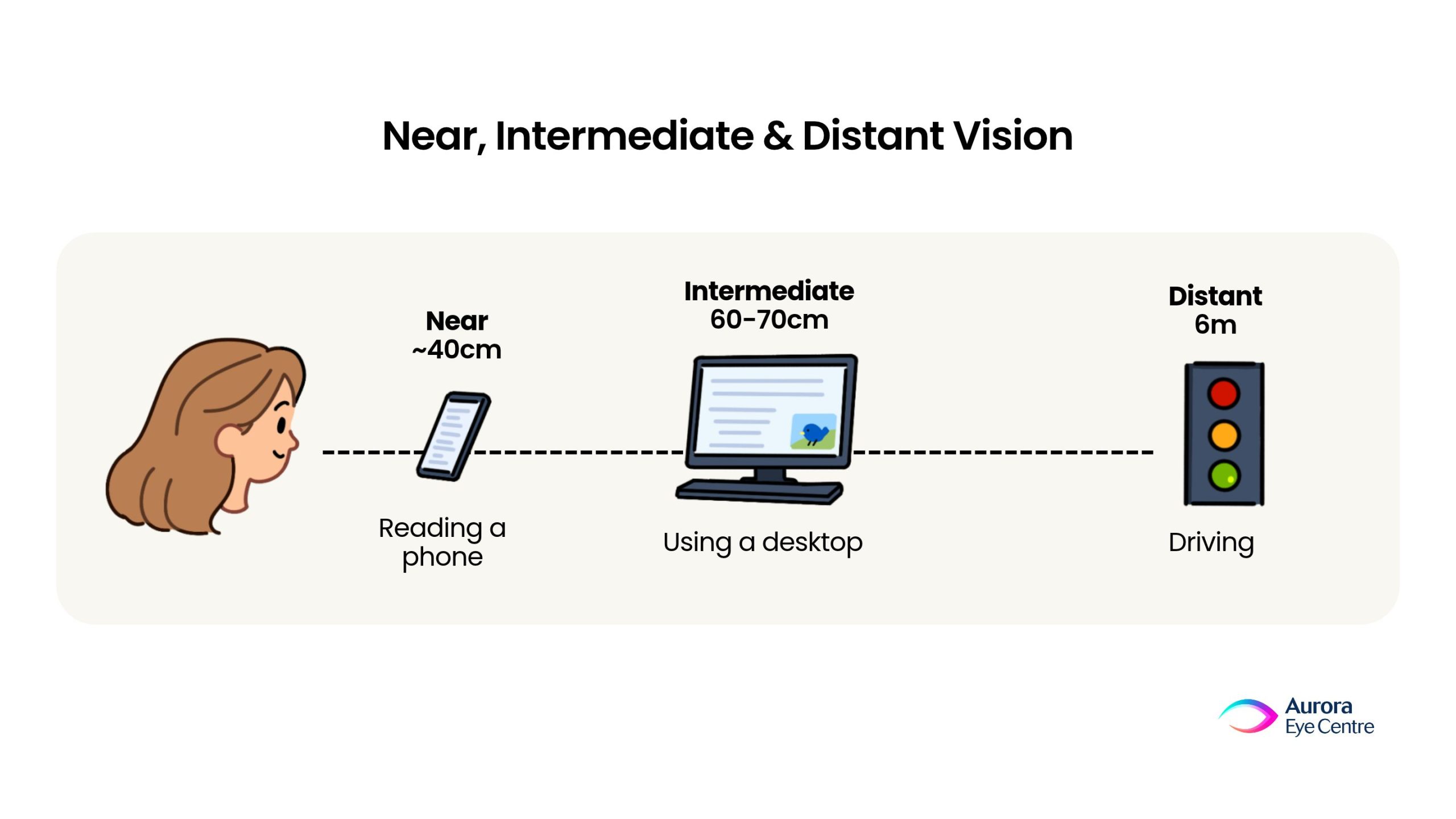
| Intermediate (Extended Depth of Focus) | Provides a wider range that covers distance, arm’s-length, and some near-vision tasks. | Reading glasses may still be needed. Some designs may cause glare or halos. |
| Multifocal | Functional vision across near, intermediate and far distances, reducing dependence on glasses. | Higher likelihood of glare, halos and reduced contrast compared with monofocal lenses. |
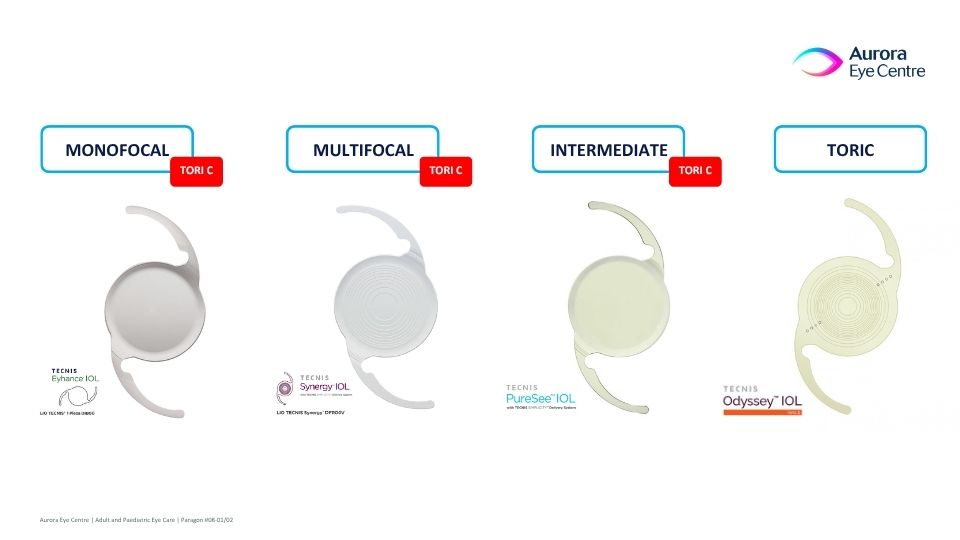
Examples of intraocular lens (IOL) designs. Monofocal, multifocal and extended depth of focus (EDOF) lenses offer different ranges of vision. Toric correction can also be incorporated into these designs to correct astigmatism.
The further a lens design tries to stretch across all three zones, the more of a compromise is usually involved somewhere in that range.
What do these trade-offs look like in daily life?
Consider someone who drives frequently at night, although multifocal lenses might reduce their need for reading glasses, it may cause halos around headlights or make it harder to distinguish objects in low light. For this person, a monofocal lens could be a more suitable option even if it means needing reading glasses.
Or take someone who works at a desk job. An extended depth of focus (EDOF) lens could provide a more useful range for distance and arm’s-length tasks, which potentially is more suitable than a monofocal lens set for distance vision.
What if the lens you want isn’t suitable for your eyes?
Even if you’re comfortable with the trade-offs, your preferred lens may not be suitable for your eyes.
For instance, conditions affecting the retina, optic nerve or cornea may already compromise visual quality. Some multifocal or EDOF lens designs can further affect contrast, making them less suitable for certain patients with existing eye disease.
Dry eyes can also interfere with the measurements needed to calculate the replacement lens power, while previous LASIK surgery can make the final prescription more difficult to predict.
This is why two patients who want the same visual outcome may receive very different lens recommendations.
The final choice isn’t simply about how much freedom from glasses you want or which compromises you’re prepared to accept, it also depends on what your eyes can realistically support.
So how should you decide what’s worth prioritising?
After understanding these trade-offs, it helps to think about what actually matters to you day to day. Broadly, people tend to fall into one of two mindsets:
- Some really want to minimise glasses altogether, even if that means adapting to some visual compromises.
- Others are perfectly comfortable wearing glasses for certain tasks, as long as the vision they do have is sharp, with no distortion.
Sometimes, less is genuinely more. A simpler lens choice that suits your eyes and lifestyle can outperform a more ambitious one that doesn’t.
There’s no perfect lens for everyone. There is, however, a lens choice that can better suit your eyes, your habits, and what matters most to you.
About Aurora Eye Centre
Aurora Eye Centre is a specialist eye clinic at Paragon Medical on Orchard Road, providing eye care for both adults and children. Refractive surgery, cataract and lens surgery, children’s eye care, squint surgery and adult eye conditions are all managed under one roof, along with the management of glaucoma, dry eyes, and retinal conditions such as age-related macular degeneration (AMD) and diabetic retinopathy. Every patient’s care begins with a careful diagnosis, honest guidance and a treatment plan tailored to the individual.
About Dr Ng Wei Yan
Dr Ng Wei Yan is a Senior Consultant Ophthalmologist and the Medical Director of Aurora Eye Centre. He is fellowship-trained in paediatric ophthalmology and adult strabismus, and sees both children and adults, with a focus on refractive surgery, cataract surgery, paediatric eye conditions and complex squint management.
Dr Ng graduated from the Yong Loo Lin School of Medicine at the National University of Singapore in 2010 and trained at the Singapore National Eye Centre, going on to complete overseas training in complex paediatric cataracts. Before establishing Aurora, he served at the Singapore National Eye Centre and KK Women’s and Children’s Hospital, where he remains a Visiting Consultant. He takes the time to walk patients through their condition and options, and is regularly invited to speak at regional and international meetings on paediatric myopia and strabismus. His recognitions include the SingHealth Quality Service Award (STAR 2025, Gold 2024) and the COVID-19 Resilience Medal (2024).
——————————–
This article is for general education and does not replace a proper consultation. If you’re noticing changes in your vision, an assessment with an ophthalmologist is the best next step to understand your options.
Aurora Eye Centre | Adult and Paediatric Eye Care
Paragon #08-01/02 | WhatsApp: +65 6589 8999 | www.auroraeyecentre.com